“I am a Muslim, and a Hindu, and a Christian, and a Jew- and so are all of you.”
How could these words slip my mind? How could I skip the non-violent mass action that Gandhi followed to achieve independence for India? Gandhi was a great leader, an Independence fighter, a social activist who tried with peaceful means to resist imperialistic rule. He saw through the racially discriminatory laws against colored people, the various acts of superiority and religious prejudice against the Indians and fought till the end for creating an equal society, staying true to his beliefs.
Gandhi’s leadership and example has inspired me, and probably many of us, to a higher level of morality. His words are still engraved in my memory and his message of freedom, democracy, equality and opportunity echoes in my head. He has taught me that before I judge someone or do something, I should walk a mile in their shoes and try to see the world through their eyes.
Undoubtedly, the world is changing. Waves of immigrants and refugees are coming to Greece and they change school reality too. However, it does not mean that they change it negatively. There were several times I found myself in front of racial school scenes.
“Why don’t you go back to where you come from?”
“Your clothes are shabby.”
“Don’t you like chocolate because it is the same color as you?”
“Slopehead”, “wog”, “chink”
I get depressed because of racial mismatch in the classroom. Where are all the ideals that Gandhi fought for? Why do students reproduce negative attitudes and discrimination? Well, I can guess some factors. Children may have grown up in families who are in favor of racist views or have witnessed violence against others causing post-traumatic stress. Middle-aged and older people may think a threat other nations due to historical reasons, for example Greek people towards Albanians. This is because the mini-crisis of 1990s which made headlines in Greek media (SE Europe Programme, 2013). They may have negative feelings towards Bulgarians due to the Macedonian Struggle of 1906 which led to the expulsion of Greek population from Bulgaria.
Friends can also have a great influence on other peers. Adolescents make fun of the physical appearance of people from different groups, for instance, they tease them about their hair and skin tone, and laugh at a racist joke. They consider themselves as “cosmopolitan” and superior nations than the others. They probably consider that this is an acceptable normal behavior but it is definitely not.
Even school is sometimes responsible for the reproduction of racist behavior. Teachers may have low expectations from lower socioeconomic-status and non-white students and they praise the academic ability of middle-class students (Carter, 2003). Difference becomes a disadvantage when students from other ethnic groups are unable to complete an exercise because it is not in their mother tongue and they do not get it. Teachers may become frustrated and reprimand them and falsely think that the cause of the problem is their low background. Needless to mention that there are white teachers who are prejudiced against black students and consequently, they give them lower ratings than white students (Downey and Pribesh, 2004).
We are living in the 21st century. Racism can be simply a thing of the past. We can follow Gandhi’s lead.
Since I believe that every change starts from education, I am here to motivate all teachers from all over the world to teach students the high ideals of democracy and create an equal classroom and consequently, an equal society.
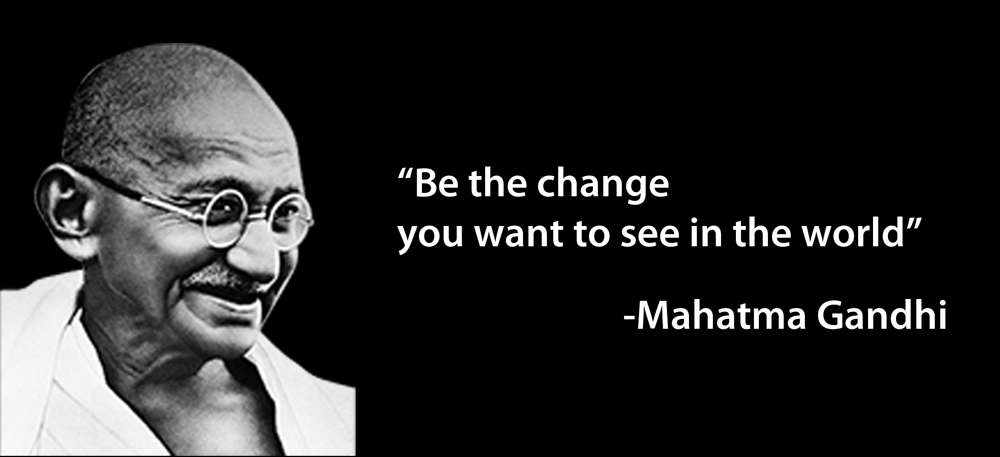
We should celebrate and learn from our differences.
We should embrace diversity.
How can we do that?
- Be armed with the knowledge that prevents any manifestations of racism at school and be ready to face such reactions effectively.
- Most activities should be solved by mixed ability groups of pupils in class in which different roles are undertaken by the team members according to their learning styles and strengths and each student shares his/her knowledge to the benefit of the learning community. So superficial barriers can break down through the communication between group members in spite of religion, race or age.
- Foster students’ confidence and self-esteem. They can sign a contract with a set of rules which they themselves have enacted concerning their behavior in class and their duties in their team. So they will feel their voice will be listened to and no one will make fun of them.
- Approach school texts critically as many of them remain monocultural or present males as the dominant group and replace them with both sides of the coin. Talk about India, Africa and how they have contributed to world civilization.
- Increase students’ understanding of cultural diversity through a problematic scenario like “You are in danger and you must flee. Your time is limited. Take three things that you consider important in your bag and leave having in mind that you are unable to return to your mother country again. Present your work and talk about your feelings in class.”
- Identify and present a list of cultural minorities in your local community. Research the reason they are refugees or immigrants in Greece and examine the ways such groups experience discrimination. Present your work in a poster. If it is possible, they can give you an exclusive interview.
Shift the existing social norms which create negative attitudes.
Shift your point of view towards difference.
Raise your voice, raise your heart and “love thy neighbor as thyself” (Gandhi, 1982).
You are not alone on this trip.
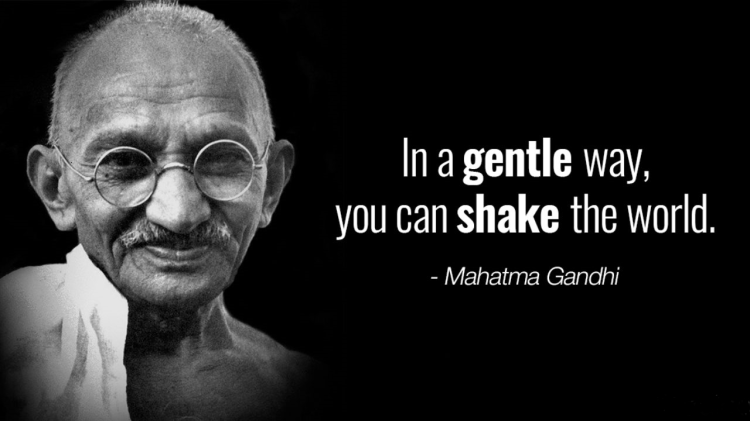
As Gandhi well said:
REFERENCES
Armakolas, I. (2013). The Greek Opinion towards Albania and the Albanians. South- East Europe Programme. Retrieved from http://www.eliamep.gr/wp-content/uploads/2013/12/The-Greek-public-opinon-towards-Albania-Final-report-Dec-2013.pdf.
Attenborough, R. (1982). Gandhi(1982). United Kingdom/ India.
Carter, P. (2003). Black’ Cultural Capital, Status Positioning, and Schooling Conflicts for Low-income African American Youth. Social Problems 50:136-55.
Downey, D. and Pribesh, S. (2004). When Race Matters: Teachers’ Evaluations of Students’ Classroom Behaviors. Sociology of Education 77: 267-82
 Love your English
This is so great Nikolita! 😉
Μου αρέσει!Μου αρέσει!
Thanks a lot ! ❤
Μου αρέσει!Μου αρέσει!
I like the fact that you have elaborated on the theme of multicultural classes and I, particularly, appreciate your exploration of it. Keep up the good work!
Μου αρέσει!Μου αρέσει!