Do you raise your eyebrow higher than the other, scratch your forehead up and put your hand over your lips wondering what CLIL is?
Well, calm yourself down. I’m here to shed light on every worry you have about CLIL.
First of all, CLIL stands for Content and Language Integrated Learning.
To put it simply, it is an innovative educational approach in which subjects like History, Geography, Science are taught by using a language other than the mother tongue. It could be a foreign language, a second language, a minority or a second official language (Coyle, 2007).
In this way, both the content of the subject and the target language are taught within authentic communication.


For example, we can have different content areas such as environment, culture, mobile phones, cosmetics apart from school subjects which are taught in the target language, that is English and simultaneously, students can interact with each other (Linares & Whitaker, 2007; Mehisto and Asser, 2008)
How many CLIL models are there?
- CLIL language showers: Short intervals/20-30 minutes 2 or 3 times a week. Students are engaged in the weekly theme like fruit, seasons etc.
- Modular CLIL: 1-2 hours a week. Teachers choose modules of a particular course which they teach in the target language.
- Interdisciplinary CLIL: 50% of specific school subjects (Maths, History) are taught in the target language.
To my mind, modular CLIL is more relevant to Greek education. Think about it. We are inspiring teachers, full of energy and love of what we are doing and ready to transfer knowledge to every young person there. However, there are some obstacles that make our teaching process difficult. There is lack of material and time and it’s hard to prepare a great amount of new educational material to cover half an hour of the lesson in the target language every day. So Modular CLIL is the key. Teachers can prepare lessons only for 1-2 hours per week by teaching English and Science for example, at the same time and believe me; it will not be hard for the students too. They will long for your lessons being always well prepared.
What kind of teaching methods can be used?
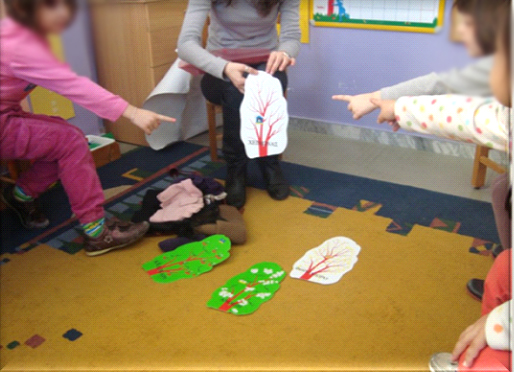
Game-based activities
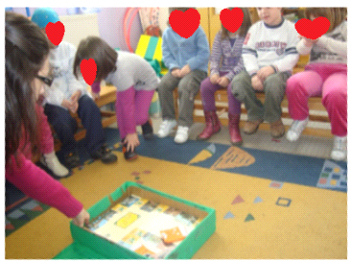
Students are getting fascinated at the idea of playing and learning together (Griva & Semoglou, 2015). I can ensure you that games decrease their sentimental filter and anxiety, enrich learning experience, give them the opportunity to practice reading and listening skills and of course, they can develop multicultural learning in authentic contexts.
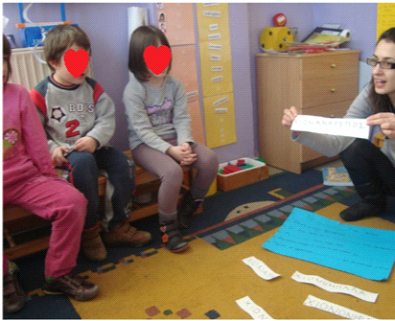
For instance, students can enrich their knowledge of history, traditions of some countries in the target language and then, they can match some facts written on a piece of paper with the corresponding country on a map or match flags to their countries.
Story-based activities
Stories enhance students’ imagination and creativity especially, by using folk stories students get in touch with the cultural world of various countries, their customs and tradition (Papadopoulos & Theologou, 2017).
To illustrate this point, students read a folk story and then, they can write some words, facts of the story and retell it. They can also draw some scenes or give a performance/ role playing in the target language.
Digital/ ICT activities
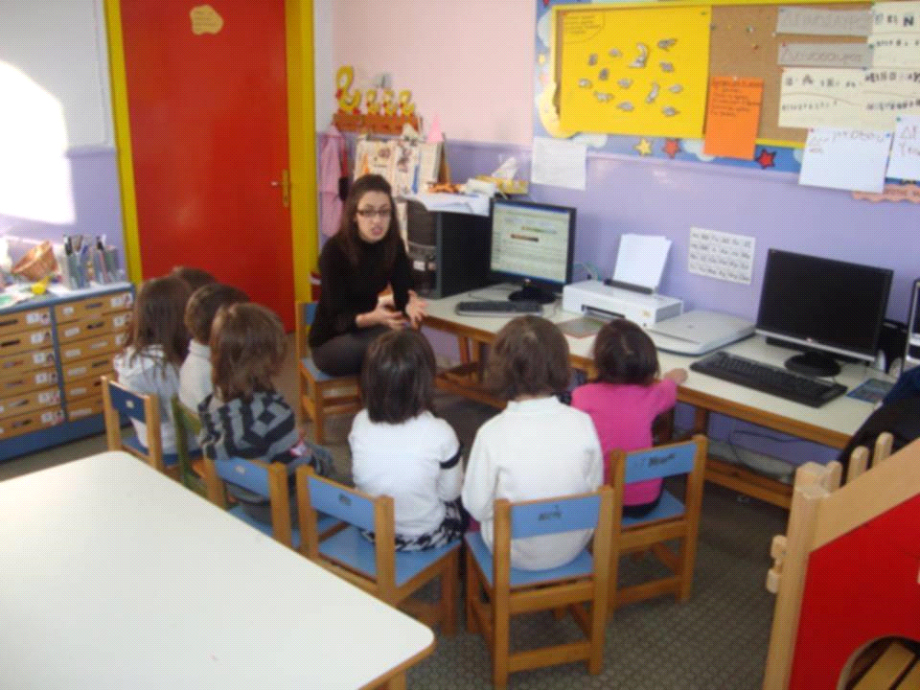
They definitely create highly motivated learners as they meet the affective needs of learners, accommodate different learning styles and facilitate the development of task-based and problem solving competences (Papadopoulos & Griva, 2014).
What about the forms of assessment?
Students’ Portfolios
Have you ever felt desperate at the sight of many sheets of paper scattered in seeming disarray? Well, I hope you can keep secrets. It was a Sunday morning when I found myself being in an all-consuming state of panic. There were so many sheets of paper, assignments and other materials on my desk that I was going to scream for help.
Assignments vs me.
Me vs assignments.
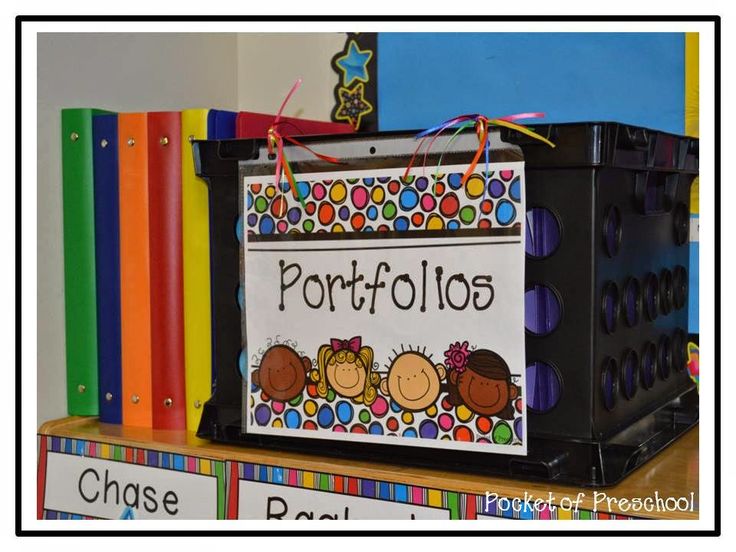
My inner voice was telling me not to quit. Then, I came across students’ portfolios. What a relief.
Students’ portfolios is a compilation of academic work that help teachers assemble and evaluate coursework quality and academic achievement (Griva & Kofou, 2018). Students can continually collect their work (essays, arts, journal entries) in an attempt to record their language development and learning, their progress and improvement. So they can become highly engaged in their own learning process through reflection.
Pre-/Post-Tests
A pre-test is distributed to all students to trace the students’ proficient level and the content-knowledge level.
The same test (post-test) is given to the students after the completion of the intervention.
The last one can provide teachers information about the effectiveness of the intervention.
Interviews
Last but not least, teachers can create structured interviews where the students have a prepared set of questions which they answer. In this way, they can develop critical reviewing skills to evaluate their own performance and develop meta-cognitive skills which are important in life.
It’s no secret that the world is changing. There are changes in technology, communication, global markets and political and social life. In the face of this fundamental change, students need to be creative thinkers and problem-solvers.

Teach passionately in ways that reach students.
Make the magic happen.
Students can be the change.
CLIL can raise wind of change.
REFERENCES
Coyle, D. (2007). Content and Language Integrated Learning: Towards a Connected Research Agenda for CLIL pedagogies. The International Journal of Bilingual Education and Bilingualism, 10 (5), 543-562.
Griva, E., & Kofou, I. (2018). Alternative assessment in Language Learning: Challenges and Practices. Kyriakidis Editions.
Griva, E. & Semoglou, K. (2015). Foreign Language and Games: Implementing Physical activities of creativity at early years (In Greek). Thessaloniki: Kyriakidis Editions.
Linares, A. & Whitaker, R. (2007). Talking and writing in a Foreign Language in CLIL contexts: a linguisic analysis of secondary school learners of geography and history. Revista espanola de linguistica aplicada, Monographic 1, 83-91.
Mehisto, P. & Asser, H. (2007). Stakeholder perspectives: CLIL programme management in Estonia. Journal of Bilingual Education and Bilingualism, 10(5), 683-701.
Papadopoulos Is & Griva, E. (2014). «Learning in traces of Greek culture». A CLIL Project for raising cultural awareness and developing L2 skills, International Journal of Learning, Teaching and Educational Research, Vol. 8, No.1, pp. 76-92
Papadopoulos, I. & Theologou, E. (2017). «Living together in a culturally diverse world»: designing and implementing a CLIL project in primary education in Griva, E. & Zorbas, V. (Eds.) Multicultural and Citizenship Awareness through language: cross thematic practices in language pedagogy. Nova Science Publishers, New York.
 Love your English
Thank you for this exciting post! CLIL is reaching its peak and it is vital that more and more teachers and instructors get informed about it and start implement it.
Μου αρέσει!Μου αρέσει!
Couldn’t agree more. Let’s implement CLIL. Let’s make the magic happen.
Μου αρέσει!Αρέσει σε 1 άτομο
This entry provides the best analysis among so many others on what ‘CLIL’ is and on how it can be implemented. I am strongly of the opinion that teaching a language through teaching the usual subjects is better than focusing purely on the language itself. Therefore, I would opt for CLIL a thousand times!
Bravo Nikoletta!
Μου αρέσει!Αρέσει σε 1 άτομο