
“If you want your children to be intelligent, read them fairy tales. If you want them to be more intelligent, read them more fairy tales.” ― Albert Einstein
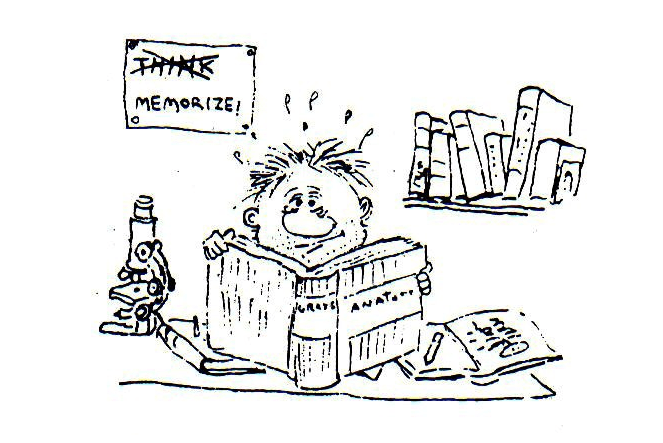
The learning environment of public Greek primary schools relies solely on rote memorization where students are taught English mostly three hours per week in a decontextualized way. In most lessons the major objective is to enhance language through spending countless nights memorizing material and learning as many new words as possible. The teacher plays the role of a transmitter of knowledge and students are undoubtedly dependent on him/her. Although the school curriculum aims at elaborating students’ cognitive, emotional and social skills, the texts seem to be boring and unappealing to students as they do not take into consideration their interests, their age and their cultural background. In addition, students are exposed to a limited variety of different texts which make them be unfamiliar with the different types of written work. As Grant (1989, 22) well said, “Using texts of different types develops a variety of reading styles.” Extra authentic materials, such as fairytales, songs, games, puzzles should be added in the course since they provide rich experience of real language use and challenge students to express themselves and engage actively (Chostelidou & Griva, 2017).
The extension and adaptation of new authentic material is necessary for an effective teaching-learning process which will meet the needs of students and will correspond to their learning styles and strengths. Fairytales are a valuable tool for teaching young learners because they increase students’ motivation by making reading interesting; Texts should be at the right level of difficulty and authentic (Cameron, 2001).
Reasons why fairytales should be included in EFL classrooms:
- They offer children both linguistic and cognitive benefits in a safe and relaxing environment (Shin, 2006), which lowers the young learners’ stress and anxiety thus, leading to more successful language acquisition (Mixon & Temu, 2006 qtd in Griva & Chostelidou, 2013)
- They make students see learning from another perspective- as entertainment and not a chore (Ellis & Brewster, 1991). In this way, students’ creative imagination is stimulated so that they want to use the language to share their ideas (Halliwell, 1992:7). Students are still young who love learning language as they read or play.
- They provide a study of universal values, capture students’ interest and challenge them to explore new roads of meaning (Cameron, 2001) because they portray real moral lessons, moral truths which remain in the hearts and minds of the learners and make them capable of dealing with battles and problems of life. Learners can identify themselves with the characters of the story and develop critical thinking.
- They can be assumed as a great model for learners in writing since they offer a clearly-set frame, specific structure, plot and terminology and a familiar setting. Most of them use the same form “Once upon a time” or have a happy ending and only one grammatical structure is used, that is the simple past tense or the present tense. Hence, students are familiar with fairytales and their language because they have background knowledge about the plot, characters, structures (Favat, 1977) and in this way, they feel less nervous and more secure to freely express themselves and write down their thoughts (Yavuz & Celik, 2017).
Stages of teaching fairytales:
Pre-stage
- The teacher uses questions to prompt students’ conceptions: Do you like fairytales? What kind of fairytales do you know? Do you know how fairytales begin? (Once upon a time etc.) Who are the main characters in fairytale? (Princess, king, frogs).
- Then they read the title of the fairytale and predict words that they might think be in the story and explain them.
- They can even have a look at the pictures and describe them both in L1 and L2 interchangeably. Let your students freely express themselves.
While stage
- Students are divided into groups and each group listens to a different part of the story related to the same topic. Then they exchange information and draw a picture.
- The teacher can give students a worksheet with T/F exercises or some new words of the text and ask them to make sentences and read them out aloud.
- The teacher may provide some words of the text and ask students to retell the story and in this way students can organize their thoughts better.
- They can talk about topics connected to values mentioned in the fairytale (hero, heroism)
- They can do creative exercises practicing the Past Simple and the Present Simple.
Post stage
- Dramatization of the story
- Composition of a song/ poem with the main themes/words of the fairytale
- Paper Crafts
Believe in magic! Believe in fairytales!
References
Cameron, L. (2001). Teaching languages to young learners. Cambridge: Cambridge University Press.
Favat, F. A. (1977). Child and tale: The origins of interest. US: NCTE Committee on Research Report No. 19.
Grant, N. 1989. Making the most of your textbook. 3rd edition. London: Longman.
Griva, E. & Chostelidou, D. (2013). Estimating the feasibility of a multisensory bilingual project in primary education. Procedia – Social and Behavioral Sciences 116 (2014),1333-1337.
Griva, E. & Chostelidou, D. (2017). CLIL in Primary Education: Promoting Multicultural Citizenship Awareness in the Foreign Language Classroom. Research Papers in Language Teaching and Learning. Retrieved January 4, 2019, from http://rpltl.eap.gr/images/2017/08-02-009-Griva-Chostelidou.pdf
Halliwell, S. (1992). Teaching English in the primary classroom. London: Longman.
Shin, S. J. (2006). High-stakes testing and heritage language maintenance. In Kondo-Brown, K. (Ed.), Heritage language development: Focus on east Asian immigrants (pp. 127-144). Amsterdam/Philadelphia: John Benjamins.
Yavuz, F. & Celik, G.Y. (2017). Using fairy tales as a model to enhance learners’ writing organization skill. International Journal of Learning and Teaching. 9(3), 349-353.
 Love your English